
Santo Domingo Convent, a memory of the British invasions
The Santo Domingo Convent, with the Basilica of Our Lady of the Rosary, is a colonial church complex in the Monserrat district of Buenos Aires. It saw fighting during the British invasions and holds the mausoleum of Manuel Belgrano in its atrium: a history-rich stop among the hidden gems in Buenos Aires.
A tower studded with wooden plugs recalls the cannon fire of 1807, and behind the altar hang flags taken from the British invaders. In the atrium rests Manuel Belgrano, buried in the Dominican habit.
The history of the Santo Domingo Convent
The Dominicans had occupied the site since 1606, but the present building was only begun in 1751, to a design by the Turin-born architect Antonio Masella. Work advanced in fits and starts because of disagreements between the designer and the order, and resumed in 1762 with Juan de Lezica y Torrezuri as the main benefactor. The church was consecrated in 1783 before it was finished, and the east tower was completed the following year. The convent itself was started in 1792 and was ready around 1805.
A few years later the church entered history. In 1806, during the British invasions, Captain Santiago de Liniers promised the friar Gregorio Torres that if he retook the city under the protection of Our Lady of the Rosary, he would donate the flags he captured. He kept his word in August of that year, and the flags have been kept in the church ever since. In 1807, when the British attacked again, the invaders entrenched themselves in the convent and resisted from the tower until they were defeated: this is the Battle of Santo Domingo. The tower was damaged by cannon fire and, when it was rebuilt, wooden plugs were placed in it to recall the impacts.
With the church reforms of the 1820s the Dominicans were expelled, and from 1826 the building housed the Natural History Museum, with an astronomical observatory and a meteorological office run by the Italian scholar Octavio Fabrizio Mossotti. In 1835 a decree by Juan Manuel de Rosas allowed the order to return, although the museum went on operating in part of the building until 1854.
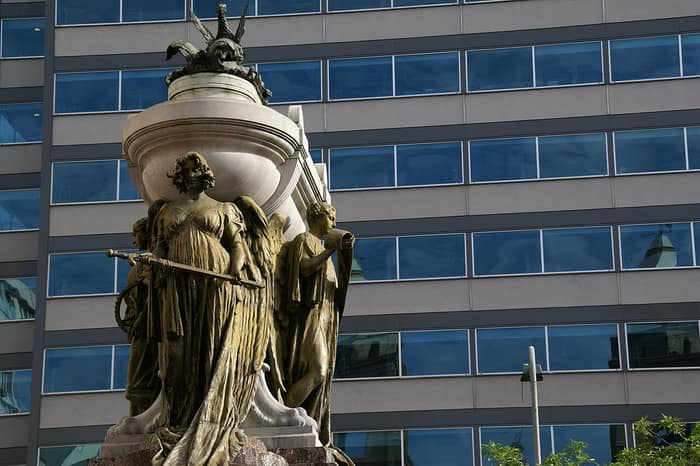
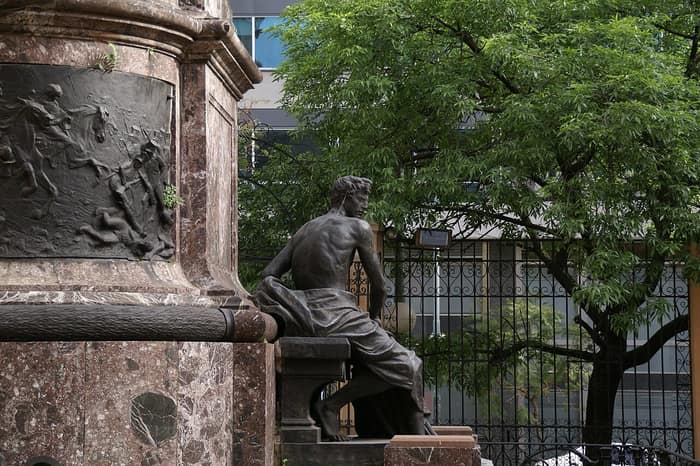
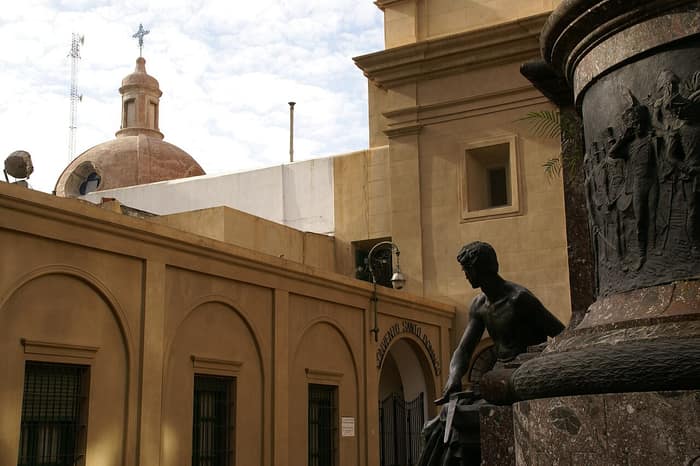
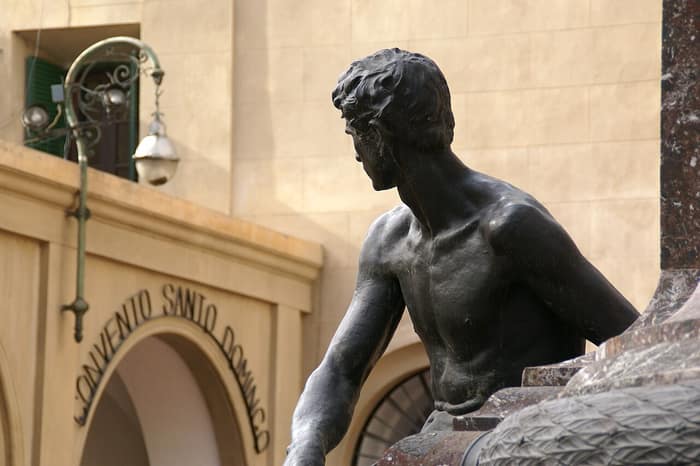
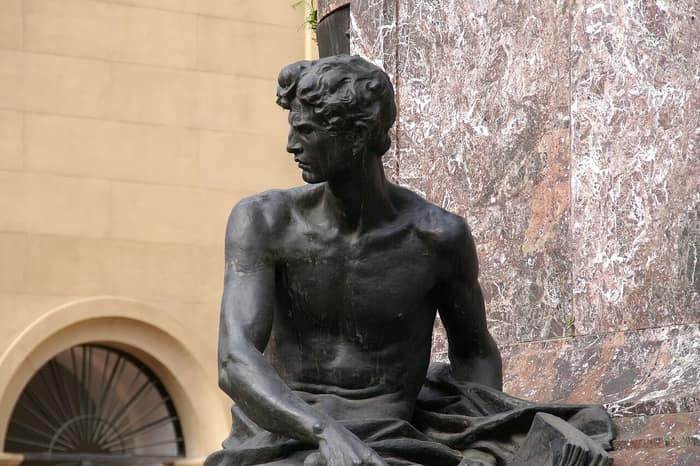
The west tower was finished in 1849, and in 1894 the architects Auguste Plou and Oliver remodelled the church and gave it its present broken pediment. The mausoleum of Manuel Belgrano, the work of the sculptor Ettore Ximenes, was inaugurated in the atrium in 1903: Belgrano, who belonged to the Third Order of St Dominic, had earlier been buried beneath a slab at the church entrance.
In 1910 the church was raised to the rank of basilica, in 1922 the image of Our Lady of the Rosary received a papal coronation and in 1942 the complex was declared a national historic monument. On 16 June 1955 the basilica was burned and looted in the disturbances that hit several churches in the centre, and most of its documents and relics were lost. Restoration work began in 1961.
Curious facts about the Santo Domingo Convent
- The wooden plugs in the tower stand in for the cannonballs of 1807, which were removed in Rosas's time and replaced by these pieces as a memorial.
- Behind the altar of the east aisle are displayed flags of the 71st Highlanders and standards of the Royal Navy, donated by Liniers to Our Lady of the Rosary.
- The weather vane on the right tower is a dog, because the Dominican name was read as Domini canis, the Lord's watchdogs; the one on the left tower is a rooster.
- The English artist Emeric Essex Vidal painted the church in a watercolour in 1817 and noted that, apart from the colours and a fine organ, it had nothing worth mentioning.
- In the 19th century the building housed an astronomical observatory; Mossotti's observations of a solar eclipse and of Encke's comet were published in London.
- Besides Belgrano, his parents, Antonio González Balcarce and Hilarión de la Quintana are buried in the church.
Tours near Santo Domingo Convent
Experiences in the area that you can book online with Viator:


Visiting the Santo Domingo Convent
- The Belgrano mausoleum stands in the atrium, behind Spanish colonial-style railings; you can see it without going inside.
- Inside the basilica, which has three naves with a barrel vault and a dome over the crossing, look for the British flags behind the altar of the east aisle.
- From the street you can see the front between the two towers, with the wooden plugs on the east tower.
- It is a working church; check the current opening days and hours before you go.
- The rest of Buenos Aires' historic centre is a short walk away.
Opening hours, access and conditions can change. Check before you go.
Map: where Santo Domingo Convent is
Photos of Santo Domingo Convent
Questions
What is the Santo Domingo Convent in Buenos Aires?
It is the Basilica of Our Lady of the Rosary and its Dominican convent, a colonial complex in the Monserrat district. It has been a national historic monument since 1942.
Where is Manuel Belgrano buried?
In a mausoleum in the atrium of the Santo Domingo Convent, inaugurated in 1903. He was buried in the habit of the Dominican order.
What happened at the Santo Domingo Convent during the British invasions?
In 1807 the British entrenched themselves in the convent and resisted from the tower until they were defeated in the Battle of Santo Domingo. The flags taken from the invaders in 1806 are kept in the church.
Why are there wooden plugs on the tower?
They recall the impacts of the 1807 cannon fire. The original cannonballs were removed and replaced by these pieces.
What happened to the basilica in 1955?
On 16 June 1955 it was burned and looted, and documents and relics were lost. Restoration began in 1961.
Can you go inside the Santo Domingo Convent?
It is a working church and the basilica can be visited. Opening times change, so check them before you go.
Also nearby

Casa de Liniers
Monserrat, Buenos Aires · the colonial house of Viceroy Liniers
100 m away

Saint Ignatius of Loyola Church
Montserrat, Buenos Aires · the oldest church still standing
350 m away

Buenos Aires Customs Palace
Montserrat, Buenos Aires · the twin-towered palace by the port
400 m away

Equestrian monument to General Manuel Belgrano
Plaza de Mayo, Buenos Aires · the general who turned to avoid the tail
450 m away