
House of Culture, the La Prensa building in Buenos Aires
The House of Culture of Buenos Aires (Casa de la Cultura), also known as the La Prensa Building, stands at Avenida de Mayo 575 and opened in 1898 as the headquarters of the newspaper La Prensa. Today it is a cultural venue and one of the hidden gems of Buenos Aires, a rewarding stop for anyone looking for what to see on Avenida de Mayo.
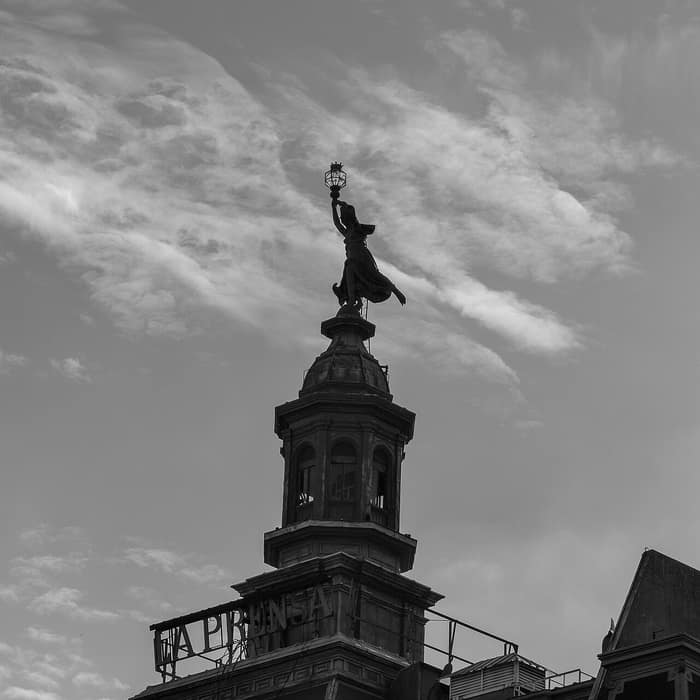
A siren in the tower has sounded only a few times in over a century: for a king's death, the Moon landing and the return of democracy. Above it, a bronze goddess holds an electric torch.
The history of the House of Culture
The newspaper La Prensa, owned by José Clemente Paz, was based on Calle Moreno until the late 19th century. Paz decided to build a new headquarters on the newly opened Avenida de Mayo, the city's first boulevard. The project was conceived in Paris and adapted to the Argentine site by Carlos Agote and Alberto Gainza, both graduates of the École Centrale des Arts et Manufactures. The design follows the canons of the Paris École des Beaux-Arts, with Second Empire façades of the kind popularised by Charles Garnier at the Paris Opera. It opened in 1898 with a ceremony that, according to one source, drew around 20,000 people.
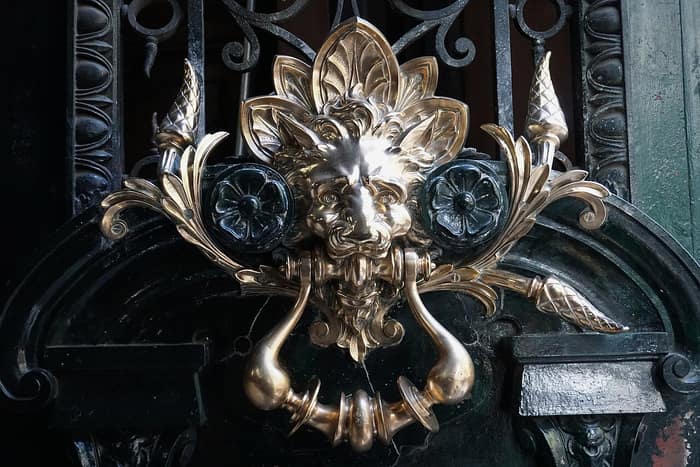
The interior was built mostly with French materials and firms: the metal structure is by the Paris company Moisant, Laurent, Savey et Cie., the mosaic floors by H. Boulanger, the ironwork by Val d'Osne and the façade clock by Paul Garnier. A company from the United States installed five electric lifts and six goods lifts. The building is organised around a central courtyard, with two basements, a ground floor and six storeys, and it even had pipes for sending correspondence between offices.
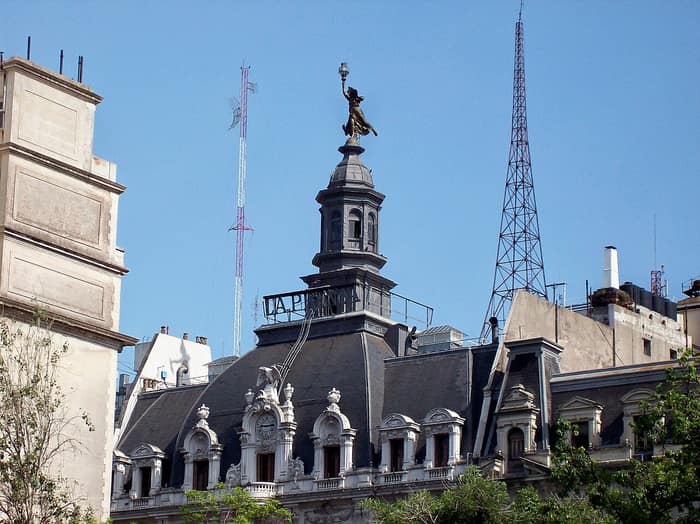
On top of the tower, some 50 metres up, a gilt bronze beacon 5.5 metres high represents Pallas Athena holding an electric torch, recalling the sacred fire of Prometheus. It was sculpted by the Frenchman Maurice Bouval. The tower also holds the siren, added in 1900 to announce exceptional events: the death of King Umberto I of Italy, the Moon landing in 1969, the 1978 football World Cup, the start of the 1982 war, the return of democracy in 1983 and, much later, the inauguration of Pope Francis in 2013.
On the first floor is the Golden Salon, inspired by Versailles, with gilded carvings, mirrors and tapestries brought from France. Athena appears on the ceiling surrounded by seven muses, and three tapestries tell the story of Esther. It housed the Popular Conference Institute, with free weekly lectures given by, among others, Jorge Luis Borges. The newspaper also kept a library of over 80,000 volumes, medical and legal consulting rooms, a weather observatory and an apartment for distinguished guests, where Giacomo Puccini stayed in 1905.
In 1951 the government of Juan Perón expropriated La Prensa and the building passed to the CGT labour union, which removed the beacon in 1952 on the grounds that it might collapse; it was put back in 1956, when the newspaper returned to its owners. Falling readership led to the sale of the building in 1988, and today it houses the culture department of the City Government. It has been declared a National Historic Monument and keeps spaces open to the public, such as the Ana Díaz Salon, which hosts art exhibitions.
Curious facts about the House of Culture
- The gilt bronze beacon weighs around 4,100 kilograms and was raised to the tower with a lift installed in the tower itself.
- In 1952 the statue was taken down on the grounds that it might fall, and it was only put back in 1956.
- The siren sounded for the Moon landing, the 1978 World Cup and the return of democracy in 1983, among other milestones.
- The eagle above the façade clock stood for journalism that “sees everything”.
- From the pavement passers-by could read a board with up-to-date news, before the printed papers came out.
- The building had internal pipes to send correspondence to the post centre on the first floor.
Tours near House of Culture of Buenos Aires
Experiences in the area that you can book online with Viator:


Visiting the House of Culture
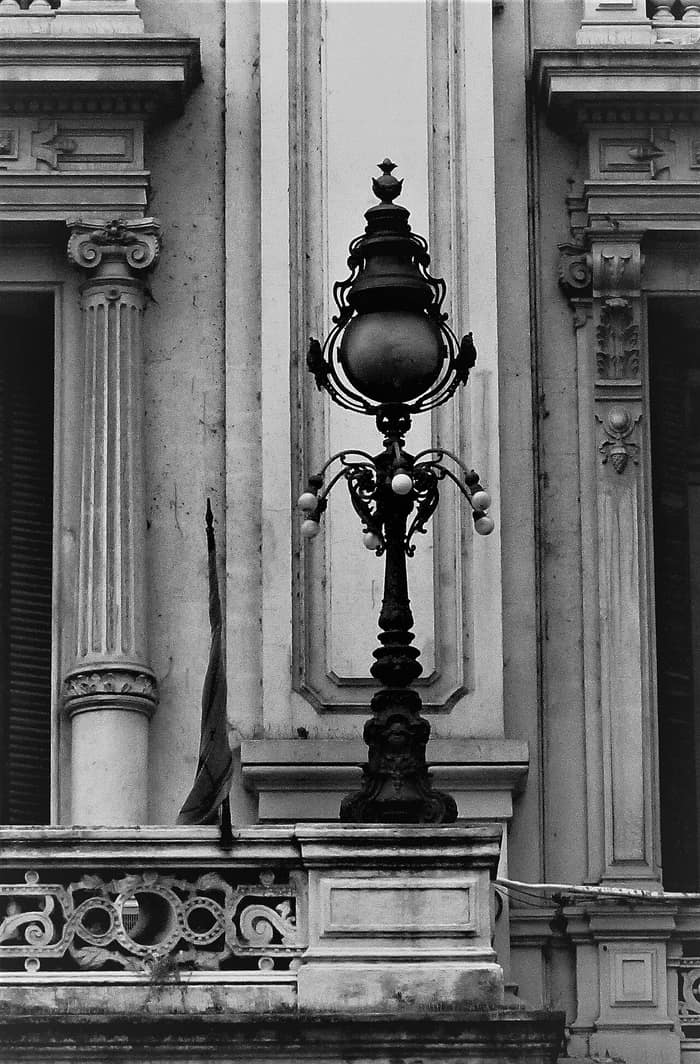
- It stands at Avenida de Mayo 575 in the historic centre of Buenos Aires; the façade and the beacon can be admired from the street.
- The building has public areas that host activities and exhibitions, including the Ana Díaz Salon; check current opening hours and visits before you go.
- The Golden Salon is the best-known interior space, with tapestries, mirrors and a painted ceiling.
- The Cabildo of Buenos Aires and other historic buildings are very close, so it combines easily with a walk along Avenida de Mayo.
Opening hours, access and conditions can change. Check before you go.
Map: where House of Culture of Buenos Aires is
Photos of House of Culture of Buenos Aires

Questions
What is the House of Culture of Buenos Aires?
It is the former building of the newspaper La Prensa, opened in 1898 at Avenida de Mayo 575. Since 1988 it has belonged to the City Government and houses culture departments.
Where is the House of Culture?
At Avenida de Mayo 575, in the Monserrat neighbourhood, in the heart of Buenos Aires and very close to the Cabildo.
Who designed the La Prensa building?
The project was conceived in Paris and adapted by Carlos Agote and Alberto Gainza for José Clemente Paz's newspaper. It follows the style of the Paris École des Beaux-Arts.
What is the beacon on top of La Prensa?
It is a gilt bronze statue of Pallas Athena, 5.5 metres tall, by Maurice Bouval, holding an electric torch at the top of the tower.
What was the building's siren for?
It was installed in 1900 to announce exceptional events, such as the Moon landing, the 1978 World Cup or the return of democracy in 1983.
Can you visit the inside of the House of Culture?
The building has public areas that host exhibitions, such as the Ana Díaz Salon. Hours and visits vary, so check before you go.
Also nearby

Galería Güemes
Downtown Buenos Aires · an Art Nouveau arcade with a viewpoint
200 m away

Equestrian monument to General Manuel Belgrano
Plaza de Mayo, Buenos Aires · the general who turned to avoid the tail
250 m away

Saint Ignatius of Loyola Church
Montserrat, Buenos Aires · the oldest church still standing
300 m away

Café Tortoni
Avenida de Mayo, Buenos Aires · a 1858 café with tango and jazz
350 m away