
Memory Park, the tribute to the victims of state terrorism
Memory Park (Parque de la Memoria) is a 14-hectare public space facing the Río de la Plata in the north of Buenos Aires. It remembers the victims of state terrorism and brings together a monument with engraved names and many sculptures: a calm, meaningful visit among the hidden gems of Buenos Aires.
A ramped path sinks into the lawn like an open wound towards the river, and the victims' names sit at hand height so that visitors can touch them. It is one of the most sober memorials in Buenos Aires.
The history of Memory Park
Memory Park began as a proposal from human-rights organisations, intended to remember the victims of state terrorism under the dictatorships of the Revolución Argentina (1969-1973) and the National Reorganization Process (1976-1983), as well as during the constitutional governments of Juan Domingo Perón and María Estela Martínez de Perón (1973-1976). According to the English Wikipedia, the first impulse came in 1997 from students of the Colegio Nacional de Buenos Aires.
The Buenos Aires city legislature approved its construction on 21 July 1998 through Law 46. The project brought together human-rights organisations, the University of Buenos Aires and the executive and legislative branches of the city. The site was chosen on the riverfront, towards which many disappeared people were thrown in the so-called death flights, about 300 metres from Aeroparque, one of the airports used for that purpose.
The design was by the architecture firm Baudizzone-Lestard-Varas, and the architect Alberto Varas won the international competition for the monument in 1998. A sculpture competition followed in 1999, with hundreds of entries. The access plaza opened on 30 August 2001, the International Day of the Disappeared, and the Monument to the Victims of State Terrorism was inaugurated on 7 November 2007.
In 2009 Law 3,078 gave the park a permanent legal and administrative framework, with a Management Council made up of human-rights organisations, the University of Buenos Aires and the city government. In 2012 a public online database was launched about the people included in the monument, and the same year the park received the Konex Platinum Award. On 9 January 2014 it was declared a National Historic Monument.
The monument consists of four concrete stelae with Patagonian porphyry plates engraved with the names of men, women, girls and boys, arranged by year of disappearance or killing and alphabetically; ages are given, and cases of pregnant women are noted. The ramped path forms a wound in the lawn running towards the river. The names were placed at a height that anyone can touch by hand.
Curious facts about Memory Park
- The names on the monument are at a height that even a short person can reach, to avoid what was seen at the Vietnam memorial, where people stretched out a hand but could not reach.
- The plates are made of Patagonian porphyry, a stone brought from Patagonia.
- Names are ordered by year and alphabetically, with the age of each victim; it is also noted if she was pregnant.
- The park has its own exhibition hall, the Sala PAyS, which has shown art and human-rights exhibitions since 2010.
- Artists with works in the park include Roberto Aizenberg, Dennis Oppenheim, Jenny Holzer, Magdalena Abakanowicz and Marie Orensanz.
- The park has received visits from leaders such as French president François Hollande and German chancellor Angela Merkel.
Tours near Memory Park
Experiences in the area that you can book online with Viator:


Visiting Memory Park
- It is a place of remembrance: visit it with respect and calm. Check the current opening hours and activities before you go.
- The route follows the ramped path towards the river, with names engraved on the plates of the monument.
- Open-air works include Figuras caminando by Magdalena Abakanowicz, La casa de la historia by Marjetica Potrč and Por gracia recibida by Juan Carlos Distéfano.
- The education area organises guided visits, mainly for schools and universities, and the Sala PAyS hosts temporary exhibitions.
- It lies by the river, beside the Ciudad Universitaria, in the north of Buenos Aires.
Opening hours, access and conditions can change. Check before you go.
Map: where Memory Park is
Photos of Memory Park
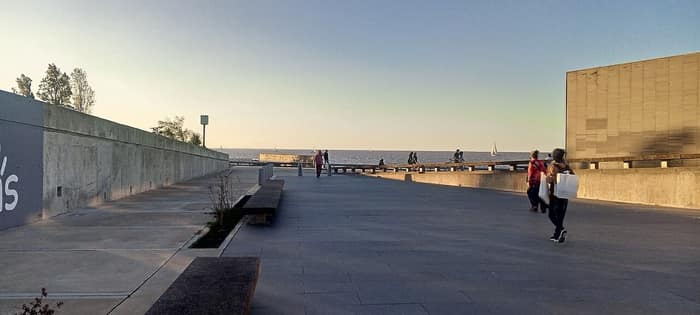


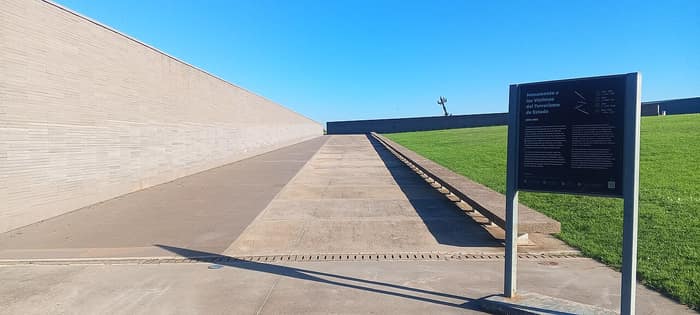
Questions
What is Memory Park in Buenos Aires?
It is a 14-hectare public space facing the Río de la Plata, created to remember the victims of state terrorism. It includes a monument with names and sculptures by various artists.
Where is Memory Park?
On Avenida Costanera Norte, beside the Ciudad Universitaria, in the north of the city and about 300 metres from Aeroparque.
When was Memory Park created?
Its construction was approved on 21 July 1998 and the monument was inaugurated on 7 November 2007. It has been a National Historic Monument since 2014.
What is there to see in Memory Park?
The Monument to the Victims of State Terrorism with porphyry plates engraved with names, open-air sculptures and an exhibition hall.
Who designed Memory Park?
The architecture firm Baudizzone-Lestard-Varas. Alberto Varas won the international competition for the monument in 1998.
Why is it on the Río de la Plata?
Because the river was the final destination of many people disappeared during the dictatorship, thrown into it in the so-called death flights.
Also nearby
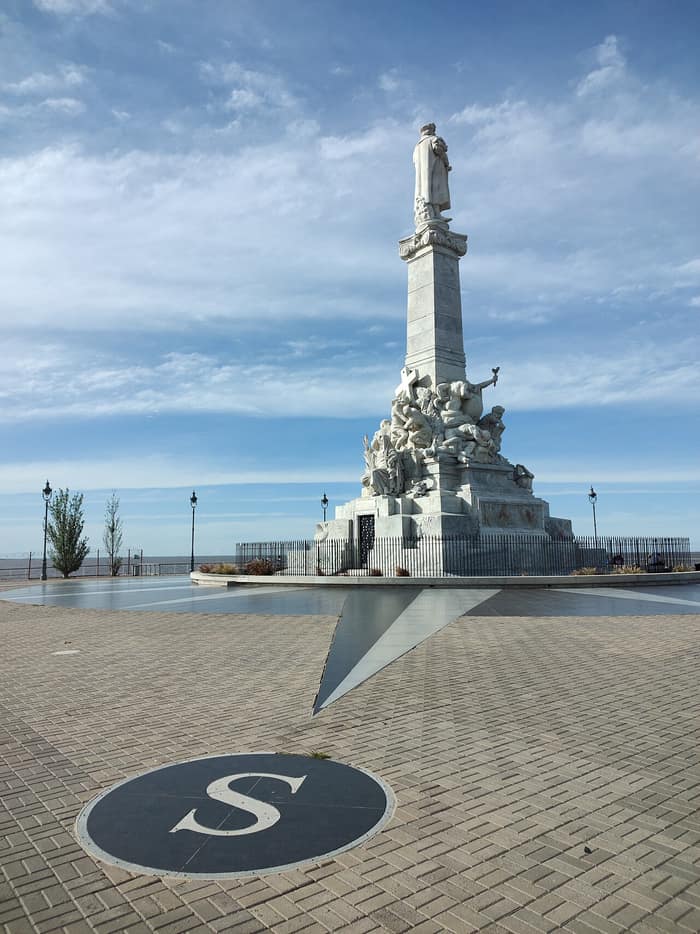
Monument to Christopher Columbus
Costanera, Buenos Aires · 26 metres of Carrara marble by the river
3 km away

Club de Pescadores
Costanera Norte, Buenos Aires · a fishing club over the river
4 km away

Galileo Galilei Planetarium
Palermo, Buenos Aires · 20 m dome, moon rock and meteorites
4 km away
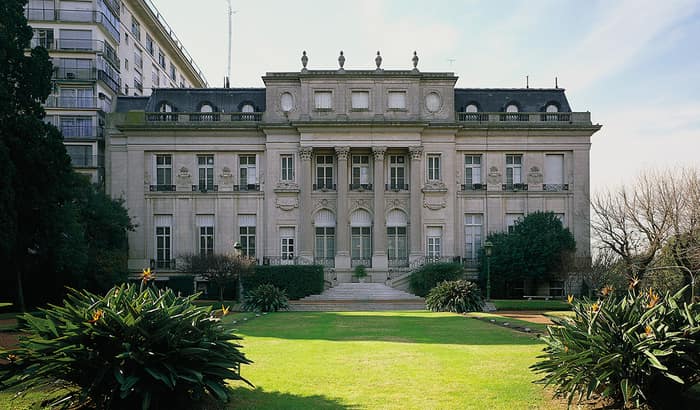
Bosch Palace
Palermo, Buenos Aires · a French Neoclassical mansion from 1917
4 km away